How to Make Math Fun for Kids: 10 Proven Ways to Build Confidence and a Love of Learning
Many children begin their educational journey excited about numbers, patterns, and puzzles. Somewhere along the way, however, math can start to feel difficult, repetitive, or intimidating, so let’s make math fun for kids.
The good news is that math does not have to feel like a chore.
Research and classroom experience consistently show that children learn best when math is engaging, interactive, and connected to real life. Game-based learning, hands-on activities, and creative problem-solving can help children build stronger math skills while developing confidence and curiosity.
Why Making Math Fun Matters
When children enjoy learning, they are more likely to:
- Stay engaged for longer periods
- Develop stronger problem-solving skills
- Build confidence in their abilities
- Practice more frequently
- Retain concepts more effectively
- Develop a positive attitude toward mathematics
A child who views math as an adventure is far more likely to persevere through challenges than a child who sees it as a list of worksheets and drills. Research on game-based learning has found that engaging activities can increase motivation, participation, and mathematical achievement.
1. Turn Everyday Activities into Math Lessons
Math is everywhere.
Invite children to count apples at the grocery store, measure ingredients while baking, compare prices, estimate distances, or calculate change. These simple activities help children understand that mathematics is a practical life skill, not just a school subject.
2. Use Games to Build Math Skills
Children naturally love games.
Board games, card games, dice games, puzzles, and scavenger hunts can reinforce important math concepts without feeling like formal learning. Many educators use game-based approaches because they help students remain engaged while practicing essential skills.
3. Celebrate Progress, Not Perfection
Children who fear making mistakes often avoid challenging problems.
Praise effort, persistence, and improvement rather than focusing only on correct answers. Confidence grows when children learn that mistakes are part of the learning process.
4. Make Learning Visual
Young learners often understand concepts better when they can see them.
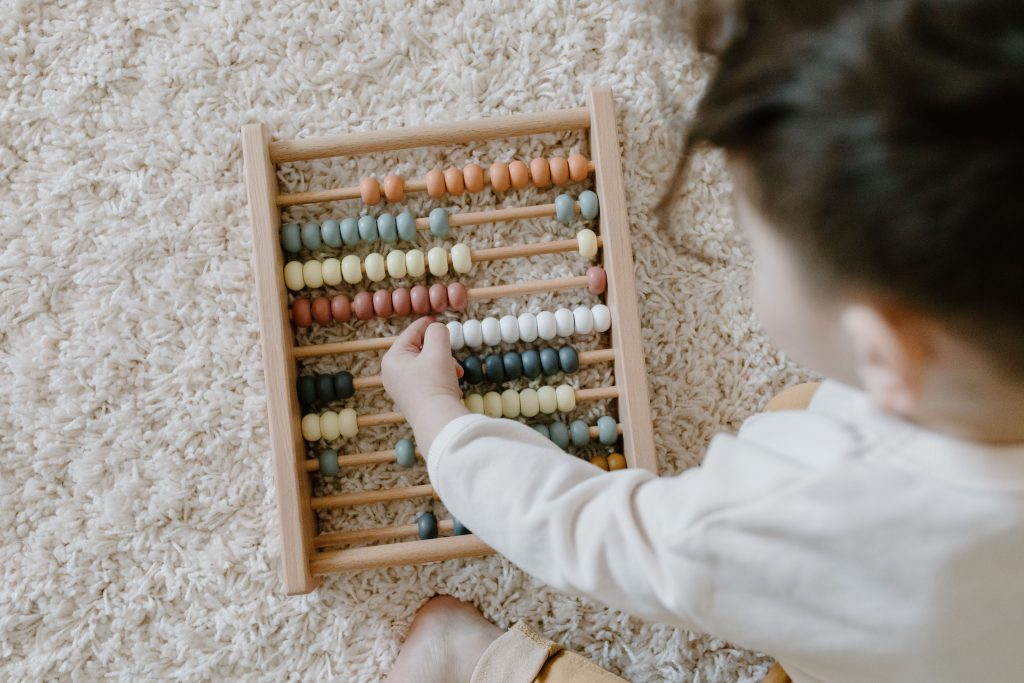
Use blocks, counters, number lines, drawings, charts, and visual patterns to help children understand abstract mathematical ideas.
Visual learning helps bridge the gap between concrete experiences and mathematical thinking.
5. Encourage Problem-Solving
Instead of immediately providing answers, ask questions such as:
- How did you figure that out?
- Can you think of another way?
- What do you notice?
- What might happen next?
These conversations develop critical thinking and mathematical reasoning skills.
Related Products
-
A Merry Bright Christmas Activity Book: 100+ Pages of Coloring, Puzzles, Mazes & Holiday Fun for Kids Ages 5+
$18.99$12.44 -
All the Love for Mom : A Mother’s Day Activity Book for Kids That Becomes a Keepsake
$16.99 -
America Through Time Travel — American History Activity Book for Kids | Coloring, Puzzles & Fun Facts
$18.99 -

America Turns 250: Activities, Puzzles, Coloring Pages, Fun Facts, and Amazing D
$18.99
6. Connect Math to Children’s Interests
Love dinosaurs?
Count them.
Love sports?
Track scores and statistics.
Love animals?
Create counting, sorting, and graphing activities.
Children engage more deeply when math connects to subjects they already enjoy.
7. Introduce Friendly Challenges
Many children enjoy solving mysteries, puzzles, and challenges.
Math treasure hunts, logic puzzles, and detective-style activities transform learning into an exciting adventure while strengthening mathematical thinking.
8. Create a Positive Learning Environment
Children quickly absorb adults’ attitudes toward mathematics.
Avoid saying things like:
“I was never good at math.”
Instead, model curiosity, persistence, and a growth mindset.
The message should always be:
“You can learn this with practice.”
9. Keep Sessions Short and Consistent
Long study sessions often lead to frustration.
Short, regular practice sessions are usually more effective than occasional marathon sessions. Even ten to fifteen minutes a day can produce significant improvements over time.
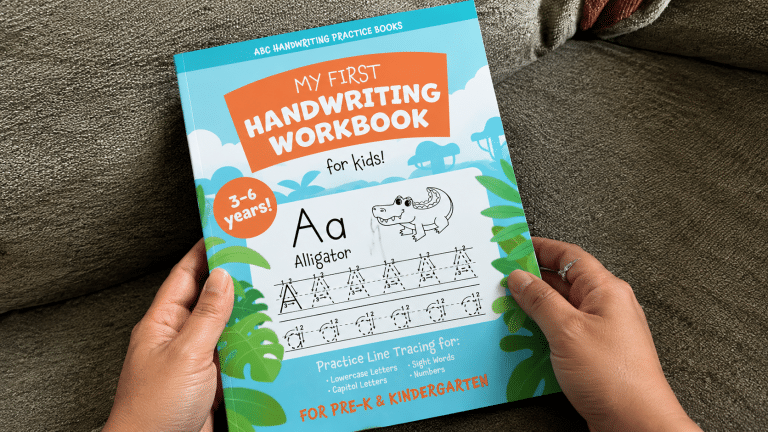
10. Use High-Quality Math Workbooks
Well-designed educational workbooks provide structure, repetition, and progressive skill development.
The best workbooks combine learning with creativity, helping children practice essential concepts while maintaining engagement and motivation.
Introducing The Math Adventure Series
If you’re looking for a fun and educational way to help children build strong math foundations, consider the Math Adventure Series.
Designed for children ages 3–12, this teacher-created collection of math workbooks for kids combines learning, creativity, and skill-building in one engaging series.
Children can develop:
- Number recognition
- Counting skills
- Number tracing
- Pattern recognition
- Early arithmetic
- Problem-solving abilities
- Mathematical confidence
Each workbook is carefully designed to support preschool math, kindergarten readiness, elementary math practice, and independent learning. The activities grow with your child, creating a step-by-step learning journey that makes math approachable and enjoyable.
Whether your child is learning to count for the first time or developing more advanced arithmetic skills, the Math Adventure Series provides an engaging pathway toward mathematical success.
The Bottom Line
Making math fun does not require expensive resources or advanced teaching techniques.
A little creativity, encouragement, and consistency can transform math from a source of frustration into an exciting opportunity for discovery.
When children experience success, enjoyment, and confidence in mathematics, they develop skills that extend far beyond the classroom.
And sometimes, all it takes is turning numbers into an adventure.